
EVA Case vs. EVA Bag: What Are the Differences?
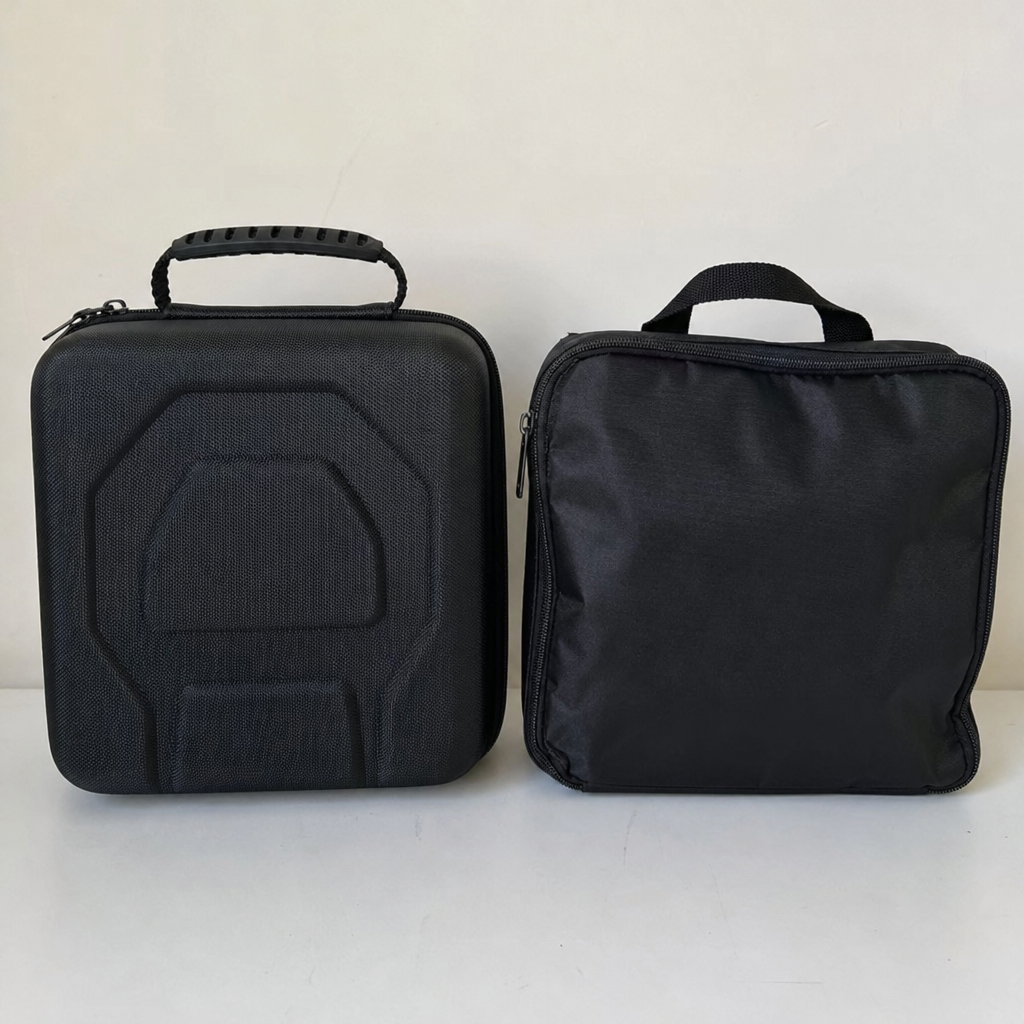
Choosing between an EVA case and an EVA bag is a choice about protection, easy carry, display, and use. Both can be made with ethylene-vinyl acetate. But they are not the same: an EVA case is usually semi-rigid and molded, while an EVA bag is softer, more flexible, and less structured. If you are comparing EVA Case vs. EVA Bag: What Are the Differences?, the best pick depends on shaped impact protection or light carry ease.
What is the main difference between an EVA case and an EVA bag?
The main difference is structure. An EVA case is often heat-formed into a set shape. That gives it a semi-rigid shell that helps absorb bumps and keep the product in place. An EVA bag may use EVA foam or EVA-like padding, but it is usually more flexible and easier to compress. It works well for daily carry, not for strong product protection.
That shape changes almost everything else. It affects fit, look, impact handling, and how well the item stays safe in storage or transport. A case is made around the product. A bag is made around general ease. Neither is always better. They solve different needs.
EVA cases give shaped, semi-rigid protection
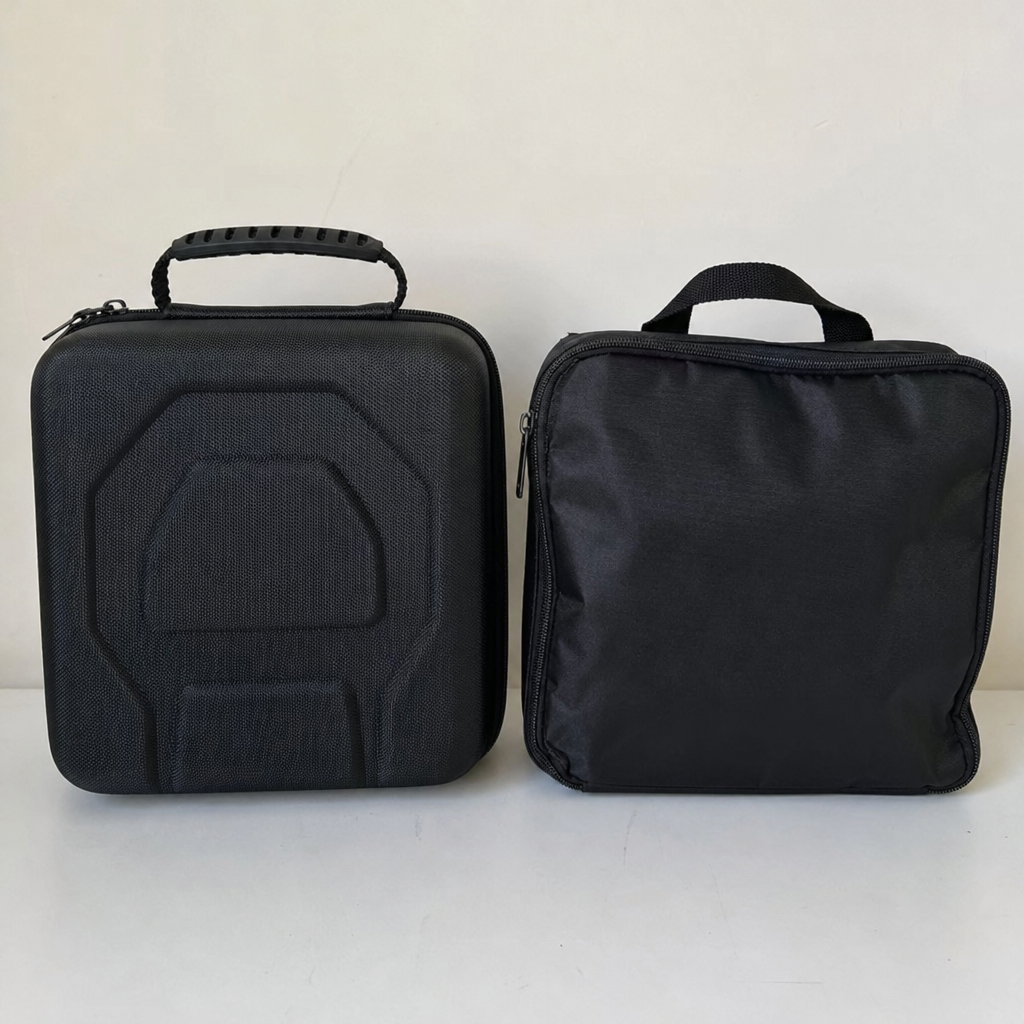
An EVA case is often made by heating and shaping EVA foam into a custom shell. This lets it fit electronics, tools, medical gear, cosmetics, accessories, or branded kits. The result is a light case that feels more protective than a fabric pouch, but less bulky than a hard plastic or ATA case.
The key benefit is a set fit. A molded EVA case can add inner trays, foam inserts, mesh pockets, elastic straps, zipper closures, printed logos, and custom surface textures. This makes it useful when the product must arrive neat, safe, and well shown.
EVA cases are especially useful for:
- Consumer electronics, such as headphones, cameras, chargers, and handheld devices.
- Professional tools, especially small diagnostic or precision tools.
- Trade show kits, where display and easy carry both matter.
- Ecommerce bundles, when packaging needs to feel reusable and branded.
- Travel accessories, where low weight and shape retention are important.
The trade-off is that EVA is still semi-rigid, not fully rigid. It works well against scratches, dust, light moisture, and everyday knocks, but it does not offer the same crush or puncture resistance as a reinforced hard case.
EVA bags favor flexibility and daily carry
An EVA bag is usually designed for soft-sided convenience. It may include padding, handles, shoulder straps, fabric panels, zipper compartments, or EVA-reinforced sections, but it does not usually hold a precise molded shape in the same way an EVA case does. That makes it easier to carry, pack, and store when protection needs are moderate.
This flexibility can be a real advantage. If the contents change often, a bag can adapt more easily than a molded case. A technician carrying cables, small tools, and documents may prefer a bag because it is easy to reach into and less strict. A consumer using a lunch bag, beach bag, cosmetic bag, or light storage bag may care more about comfort and capacity than a custom product fit.
The drawback is less structure. Flexible bags can let contents shift, hit each other, or press together. If the item has delicate screens, precision parts, sharp edges, or a high replacement cost, a bag may need extra padding or dividers to give enough protection.
Which option is better for your product or transport case?
Choose an EVA case when the item needs a steady fit, a cleaner brand display, and stronger everyday impact protection. Choose an EVA bag when the contents change, the risk is low, and comfort or easy carry matters more than molded protection. For heavy freight, airline cargo, repeated stacking, or harsh jobsite use, consider a hard plastic or ATA-style case instead.
A helpful way to decide is to think about the trip, not just the product. A device in a retail box may need different packaging than a diagnostic tool carried daily between worksites. The more uncertain the handling, the more structure you need.
Practical selection checklist
Before choosing, ask:
- How fragile is the item? Screens, lenses, calibrated tools, and precision parts do better in a molded EVA case or harder shell.
- Will the contents change often? If yes, a flexible EVA bag may be more practical.
- Will we stack, ship, or check the case as luggage? Heavy compression points toward a hard plastic or ATA case.
- Does brand display matter? A molded EVA case often looks more polished and product-specific.
- Is weight a major concern? EVA cases and bags are both lighter than many rigid choices, but bags are usually easiest to carry.
- Do you need inside order? Cases can be shaped to fit cavities; bags work better with pockets and dividers.
The role of hard cases, ATA cases, and plastic shells
EVA cases are often compared not only with EVA bags, but also with hard plastic and ATA cases. These rigid choices use stronger shells, reinforced corners, metal hardware, plywood or composite panels, and tougher closures. They are built for rough transport where crushing, punctures, stacking, vibration, and repeat freight handling are real concerns.
That added strength comes with trade-offs. Rigid cases are usually heavier, bulkier, and less budget-friendly for small or mid-volume custom projects. Hard plastic cases may also need more costly tooling, especially when a fully custom shell is needed. EVA cases can often be developed more quickly and at lower cost for pilot runs, branded launches, or mid-volume product programs.
Weight, cost, custom work, and lifespan all matter
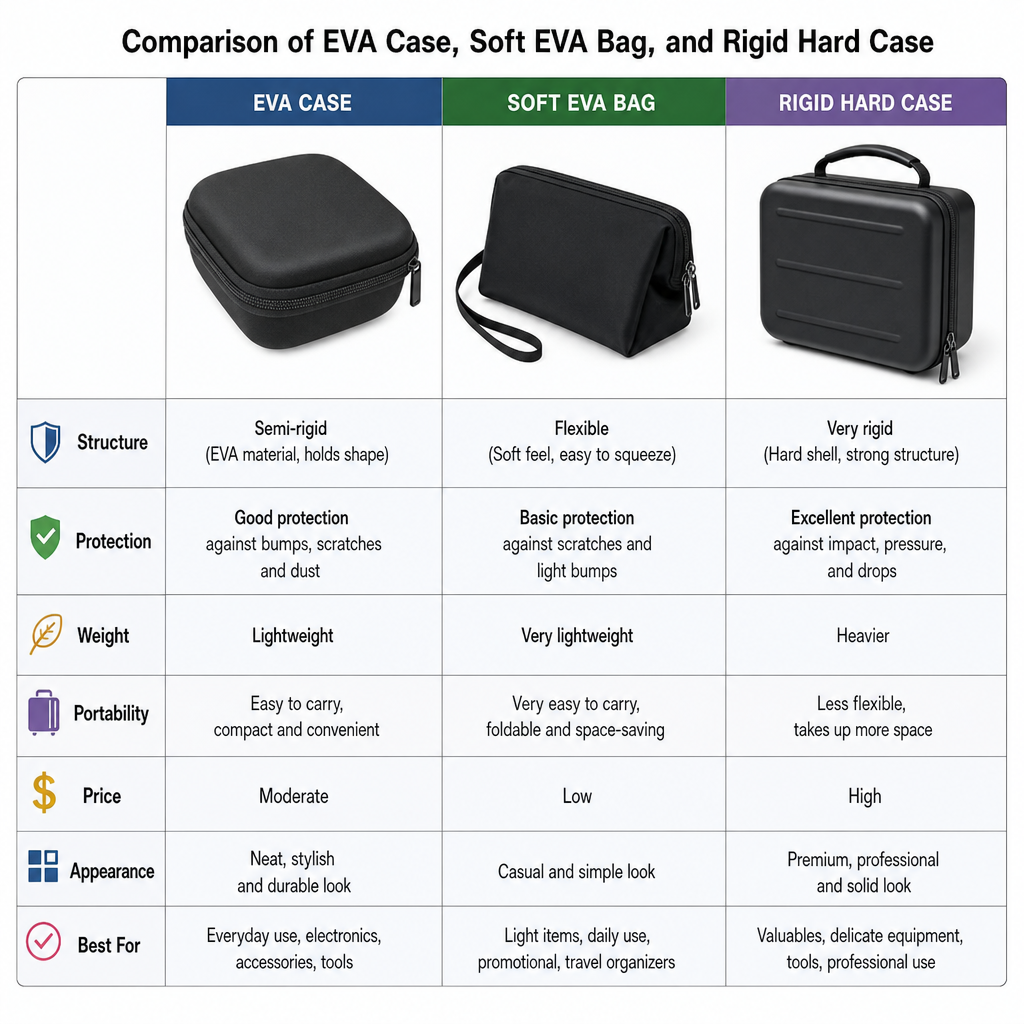
Protection is important, but it is not the only factor. A compelling case that customers hate carrying can become a poor user experience. A nice light bag that fails to protect the product can create replacement costs and brand frustration. The best choice balances real-world use with the value and risk of the contents.
EVA cases are popular because they sit in the middle. They are lighter than most rigid cases, more protective than most soft bags, and very adaptable for shape, color, logo placement, zipper style, handle type, inside layout, and surface finish. They also resist everyday dirt and splashes better than many plain fabric bags, though they should not be treated as fully waterproof unless they are built and tested for that purpose.
EVA bags are usually simpler to maintain. They can often be wiped clean depending on the surface material, and their flexible build makes them useful for casual use. However, once a soft bag loses shape, tears, or compresses too much, repair may be limited. Hard cases, by contrast, may allow hardware repairs such as replacing latches, wheels, or handles, but the shell itself can still crack or bend under severe abuse.
Quick comparison
| Factor | EVA case | EVA bag | Hard/ATA case |
|---|---|---|---|
| Structure | Semi-rigid, molded | Flexible, soft-sided | Fully rigid |
| Protection level | Moderate to strong everyday protection | Light to moderate protection | Highest protection for rough transport |
| Weight | Light | Light to moderate | Heavier |
| Brand display | Strong; good for shaped presentation | Good; more casual | Good, but often more industrial |
| Best for | Electronics, tools, kits, retail products | Daily carry, mixed contents, low-risk storage | Freight, touring, stacking, rugged field use |
| Main limit | Less crush-resistant than hard cases | Less structured protection | More weight, bulk, and cost |
A simple way to choose
If the product needs to look neat, stay in place, and survive regular handling, start with an EVA case. If the user mainly needs a light carrier for changing contents, an EVA bag may be enough. If the item is heavy, very expensive, or likely to face rough shipping, move up to a rigid hard case or ATA case.
The smartest choice is the one that matches the product’s real risk. For many brands and users, EVA cases offer the best balance of protection, easy carry, custom work, and display. EVA bags still have a useful role, but they are better seen as handy carriers than as shaped protective packaging.