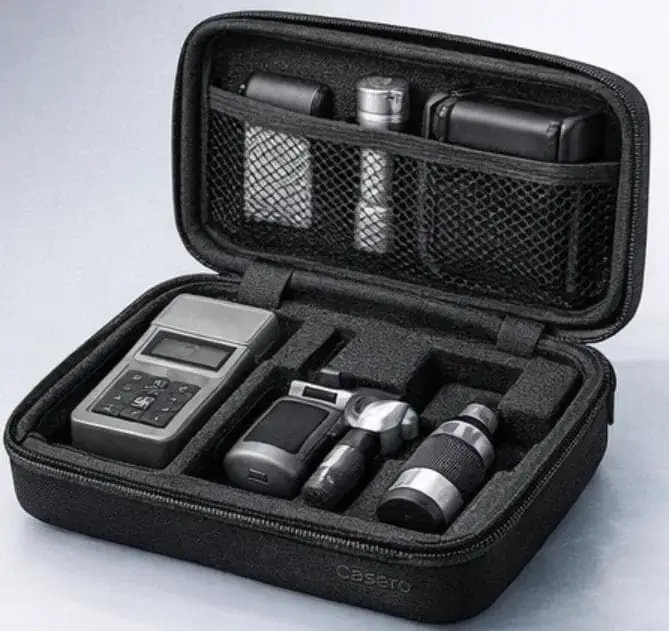

When a product needs more protection than a simple pouch can provide, but a heavy hard-shell case is unnecessary, an EVA case can be a practical solution. EVA cases are widely used for electronics, medical accessories, tools, personal care products, and portable equipment because they combine a lightweight structure with cushioning and flexible design options.
However, not every EVA case offers the same level of protection. Its performance depends on the shell structure, foam properties, exterior material, interior layout, and the product it is designed to hold.
In this guide, we explain what EVA cases are, how they are made, their main advantages, where they are used, and what buyers should consider when choosing a custom EVA protective case.
What Is an EVA Case?
EVA stands for ethylene-vinyl acetate, a copolymer used in many flexible and cushioning applications. In a typical EVA carrying case, EVA foam provides the structural core, while fabric or synthetic leather may cover the exterior. The inside can include a fabric lining, foam insert, mesh pocket, elastic strap, or molded compartment.
The finished case is generally semi-rigid. It can maintain its shape better than a simple soft pouch while remaining lighter and more flexible than many rigid plastic cases.
An EVA case is not made from EVA alone in every application. Its performance and appearance depend on the complete construction, including the shell, lining, closures, and internal protection.
[Image 1: Insert a high-quality photo of an open EVA protective case showing its exterior shell, zipper, lining, and foam compartments.]
Suggested image filename: eva-protective-case-structure.jpg
Alt text: Open EVA protective case showing the molded shell, zipper, fabric lining, and foam compartments.
Key Benefits of EVA Protective Cases
EVA cases are selected for different reasons depending on the product and its intended use. The following are some of their most useful characteristics.
1. Lightweight and Easy to Carry
EVA cases can provide a structured enclosure without the weight associated with some metal or heavy-duty hard-shell cases. This makes them suitable for portable electronics, travel accessories, handheld instruments, and products that users carry regularly.
The final weight still depends on the case dimensions, foam thickness, exterior fabric, hardware, and internal components.
2. Shock Absorption and Cushioning
EVA foam can help absorb and distribute impact energy. When the shell and interior compartments are designed correctly, the case can reduce movement and help protect the contents from everyday bumps and handling.
Protection is not determined by the material alone. The product’s weight, shape, fragile areas, clearance inside the case, and expected drop conditions all matter. A case intended for sensitive equipment should be evaluated through appropriate product-specific tests.
3. Moisture Resistance
EVA material itself has useful moisture-resistant characteristics, and a suitable case construction can help protect contents from light splashes and humid conditions.
However, an EVA case is not automatically waterproof. Zippers, seams, stitching holes, and openings can allow water to enter. If the case will be used outdoors or in wet environments, specify the required level of water protection and test the complete finished case.
4. Flexible Design and Customization
Custom EVA cases can be developed in different sizes, shapes, colors, and interior configurations. Depending on the manufacturing method and budget, customization may include:
- Case dimensions and overall shape
- Shell thickness and firmness
- Exterior fabric or synthetic leather
- Interior lining and foam inserts
- Mesh pockets, elastic straps, and dividers
- Zipper type, pullers, and handles
- Printed logos, embossed details, or branded labels
The key is to choose features that improve usability rather than adding complexity without a clear purpose.
5. Professional Appearance
An EVA case can be designed to match a product’s brand identity. Surface materials, color combinations, zipper details, and interior layouts all influence the final appearance.
For electronics, beauty devices, and premium accessories, the case may serve two purposes: protecting the product and presenting it in a more organized, professional way.
EVA Cases vs. Other Case Materials
Choosing a case material requires balancing protection, weight, cost, appearance, and intended use. The following table provides a general comparison.
| Material | Main Characteristics | Potential Advantages | Common Considerations |
|---|---|---|---|
| EVA case | Semi-rigid, foam-based construction | Lightweight, cushioning, customizable | Protection depends on design and testing |
| Soft fabric pouch | Flexible textile construction | Lightweight, simple, often economical | Limited structural protection |
| ABS plastic case | Rigid plastic shell | Maintains shape and provides a hard exterior | Can be heavier or bulkier depending on design |
| Aluminum case | Rigid metal construction | High structural rigidity and a premium industrial appearance | Higher weight and potentially higher cost |
| Molded foam insert | Shaped cushioning material used inside a container | Supports and separates specific products | Often requires a separate outer case |
There is no universally best material. A soft pouch may be sufficient for a lightweight cable, while precision equipment may require a more rigid enclosure and carefully designed internal cushioning.
An EVA case is often worth considering when the project needs a balance between portability, cushioning, and a customizable appearance.
[Image 2: Insert a comparison image showing an EVA case, a soft pouch, and a rigid plastic case side by side.]
Suggested image filename: eva-case-vs-other-case-materials.jpg
Alt text: EVA protective case compared with a soft fabric pouch and a rigid plastic case.
Common Applications of EVA Cases
The versatility of EVA case construction makes it suitable for a wide range of products. The appropriate design varies according to the product’s dimensions, fragility, usage frequency, and storage environment.
Electronics and Digital Accessories
EVA cases are commonly considered for earbuds, headphones, chargers, cables, portable hard drives, gaming accessories, and small electronic devices.
A well-designed interior can help prevent components from moving around during transport. Cutouts should match the product’s shape without making removal difficult or applying excessive pressure to buttons, screens, or connectors.
Medical Devices and Healthcare Accessories
Portable medical instruments and accessories may require organized storage and protection during transport. An EVA case can incorporate individual compartments, secure straps, and easy-to-clean lining materials.
For medical applications, material compatibility, cleaning requirements, and any applicable regulatory requirements should be reviewed before production. A general-purpose EVA case should not be assumed suitable for sterile storage or clinical use without validation.
Beauty and Personal Care Products
Electric facial cleansing devices, beauty tools, manicure equipment, and grooming accessories can benefit from a compact carrying case.
Interior dividers can separate devices from cables and smaller accessories. Exterior colors and branding can also be selected to match a product line.
Tools and Measuring Equipment
Handheld instruments, measuring devices, small repair tools, and testing accessories may require a combination of cushioning and organized storage.
The interior layout should account for the tool’s weight and shape. Heavy or sharp components may need reinforced compartments or additional protective materials.
Travel and Outdoor Accessories
Portable accessories, compact outdoor equipment, and personal travel items are other potential applications.
For products exposed to rain, dust, vibration, or large temperature changes, buyers should define the actual environmental conditions before selecting materials and closures.
[Image 3: Insert a collage showing EVA cases for electronics, beauty tools, medical accessories, and measuring instruments.]
Suggested image filename: eva-case-applications-electronics-medical-tools.jpg
Alt text: Custom EVA cases designed for electronics, beauty tools, medical accessories, and measuring instruments.
How Are EVA Cases Made?
Manufacturing methods vary according to the case design, materials, required appearance, and production volume. A typical custom project may involve the following stages.
Step 1: Product Assessment and Design
The manufacturer reviews the product’s dimensions, weight, shape, fragile areas, accessories, and expected usage. These details help determine the outer dimensions, internal layout, and level of protection required.
A physical product sample or accurate 3D file can help reduce misunderstandings during development.
Step 2: Material Selection
The EVA layer, exterior covering, inner lining, and optional foam inserts are selected according to the intended application.
The correct combination should balance stiffness, cushioning, weight, appearance, durability, and cost. Selecting a material based only on its thickness may not deliver the expected performance.
Step 3: Shell Forming and Cutting
Depending on the construction, EVA sheets and covering materials may be laminated and formed into a semi-rigid shell. Cutting and trimming operations help achieve the required dimensions and shape.
The precise process varies by manufacturer and case design.
Step 4: Interior Assembly
The manufacturer adds the lining, foam inserts, dividers, mesh pockets, elastic straps, and other internal features.
At this stage, the fit of the actual product is particularly important. Compartments should hold the contents securely without making them difficult to remove.
Step 5: Zipper, Handle, and Branding Installation
Zippers, handles, pullers, labels, and branding elements are assembled according to the design specification.
These components should be checked for alignment, smooth operation, secure attachment, and consistency.
Step 6: Quality Inspection and Testing
Before mass production is approved, samples should be inspected for dimensions, appearance, stitching, bonding, zipper function, and product fit.
Where protection is a key requirement, the test plan should reflect the actual use conditions. Drop, vibration, compression, or environmental tests may be appropriate depending on the application.
[Image 4: Insert a real manufacturing photo showing EVA shell forming, interior assembly, or finished-case inspection.]
Suggested image filename: eva-case-manufacturing-quality-inspection.jpg
Alt text: EVA carrying case manufacturing process with interior assembly and finished-case quality inspection.
How to Choose the Right Custom EVA Case
For businesses developing a new product or sourcing a protective carrying case, clear specifications can make sampling more efficient and help reduce avoidable revisions.
| Selection Factor | Questions to Consider | Why It Matters |
|---|---|---|
| Product dimensions | What are the product’s exact length, width, and height? | Determines the case size and interior clearance |
| Product weight | How heavy is the product with its accessories? | Influences shell design and internal support |
| Protection requirements | Is the main concern impact, scratching, compression, or organization? | Guides the protective structure and test plan |
| Exterior material | Is fabric, synthetic leather, or another surface preferred? | Affects appearance, wear resistance, and cost |
| Interior layout | Are cutouts, pockets, straps, or dividers needed? | Improves fit and keeps components organized |
| Branding | Is a logo, custom color, or branded zipper pull required? | Supports a consistent product identity |
| Production quantity | Is the project for a small launch or recurring production? | Helps assess tooling, sampling, and unit-cost trade-offs |
| Compliance and testing | Are specific safety, material, or environmental requirements applicable? | Helps establish the necessary documentation and validation |
A Practical Tip: Test the Product Inside the Case
A case may look correct in a drawing or photograph but still be difficult to use. The product could be too tight to remove, accessories might shift during transport, or the zipper could press against a sensitive component.
Before approving mass production, test the case with the actual product and accessories. Check how the product is inserted, removed, stored, and transported.
This simple step can reveal design problems that are difficult to identify from exterior appearance alone.
What Affects the Cost of a Custom EVA Case?
The price of an EVA case depends on more than its outside dimensions. Important cost factors include:
- Size and construction: Larger cases and more complex shapes may require additional material or processing.
- Material selection: Exterior fabrics, lining materials, EVA specifications, and hardware affect the cost.
- Interior design: Custom-cut foam, multiple compartments, pockets, and straps add design and assembly requirements.
- Branding and finishing: Printing, embossing, labels, and custom hardware can change the production cost.
- Tooling and development: New shapes or specialized construction may involve setup or tooling expenses.
- Order quantity: Material purchasing, setup, labor allocation, and production efficiency can affect unit pricing.
For a meaningful quotation, provide the product dimensions, reference photos or drawings, expected order quantity, preferred materials, interior requirements, and branding details.
Comparing quotations is more useful when each supplier is pricing the same specification rather than different assumptions about the finished case.
Frequently Asked Questions About EVA Cases
Are EVA cases durable?
EVA cases can provide durable everyday protection when the materials, shell construction, closures, and interior layout are appropriate for the application. Actual service life depends on usage frequency, exposure conditions, and manufacturing quality.
Are EVA cases waterproof?
Not necessarily. EVA material can resist moisture, but the complete case may allow water through its zipper, seams, or openings. A waterproof requirement should be clearly specified and verified through testing.
Can EVA cases be customized?
Yes. Depending on the manufacturing process, EVA cases can be customized in size, shape, color, exterior material, lining, foam compartments, zipper configuration, handles, and branding.
Are EVA cases suitable for electronics?
They can be suitable for many portable electronics and accessories. The internal structure should fit the device properly, prevent excessive movement, and avoid pressure on delicate areas. The appropriate protection level should be verified for the intended use.
What information is needed to request a custom EVA case quotation?
Useful information includes the product’s dimensions and weight, photographs or drawings, intended application, required protection level, preferred exterior and interior materials, branding requirements, and estimated order quantity. A physical sample or 3D file can help clarify complex shapes.
How can I reduce the risk of problems during mass production?
Confirm the complete case specification before sampling, test the actual product fit, review critical dimensions and assembly details, and agree on inspection criteria before approving mass production. For sensitive products, define the required performance tests in advance.
Final Thoughts
An EVA case is more than a shaped foam shell. Its effectiveness depends on how the material, exterior covering, interior layout, closures, and product requirements work together.
For product developers, designers, and procurement teams, the most reliable approach is to begin with the product’s real protection and usability requirements, develop a suitable case structure, and validate the sample before committing to mass production.
A well-specified case can help protect products, improve organization, and create a more consistent user experience throughout storage, transportation, and everyday use.