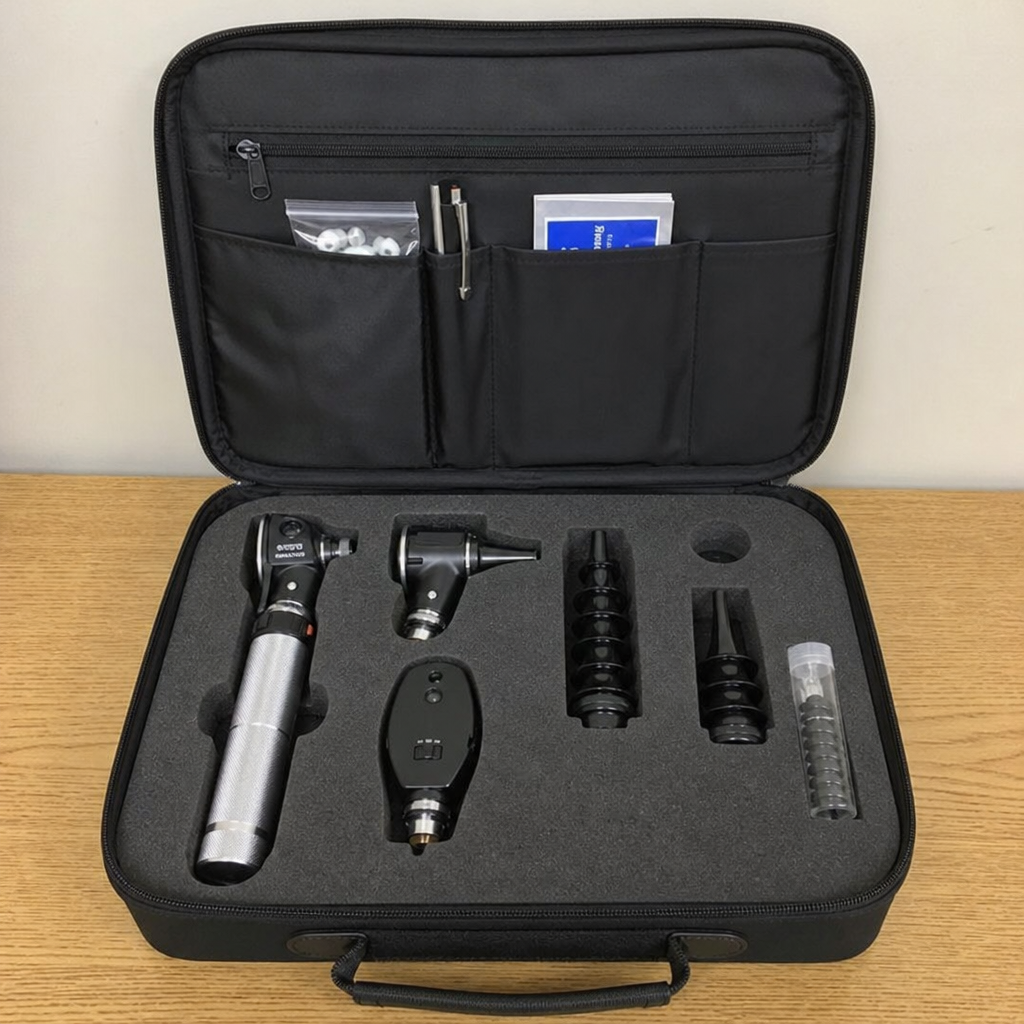
Learn how to design an EVA carrying case for headphones, ensuring protection and usability through detailed specifications. Ideal for product designers and purchasing managers.
How to Design an EVA Carrying Case for Headphones
Designing an EVA headphone case starts with the headphones’ storage shape, then builds the shell, cushioning, closure, and accessory layout around it. For brand owners, importers, product designers, and purchasing managers, the goal is a repeatable specification that balances protection, everyday usability, manufacturing feasibility, and purchasing cost. This article explains the decisions to make before approving tooling or placing a production order.
How do you design an EVA carrying case for headphones?
Start by measuring the headphones in their intended storage position, identifying sensitive areas, and defining the accessories that must travel with them. Develop the internal layout first, then specify the case construction, opening, materials, and appearance. Validate those choices with a physical sample before approving production; case manufacturers describe product review, drawings, and prototyping as early development steps.
Learning how to design an EVA carrying case for headphones is largely about managing interfaces: headphone to insert, insert to shell, lid to accessories, and finished case to shipping carton. Treat these as one design project rather than separate purchasing decisions.
Create a short brief covering:
- Product: Headphone model, weight, folded configuration, and any planned variants.
- Use environment: Commuting, business travel, retail bundles, studio storage, or equipment checkout.
- Contents: Charging cable, audio cable, adapter, detachable microphone, and other essentials.
- Protection priorities: Identify concerns to investigate, such as earcup movement or pressure on hinges.
- Commercial requirements: Order quantities, target cost, branding, packaging, and destination markets.
Agree which requirements are mandatory and which can change. That distinction gives suppliers room to suggest alternatives without compromising the purpose of the case.
Measure the storage envelope, not just the headphones
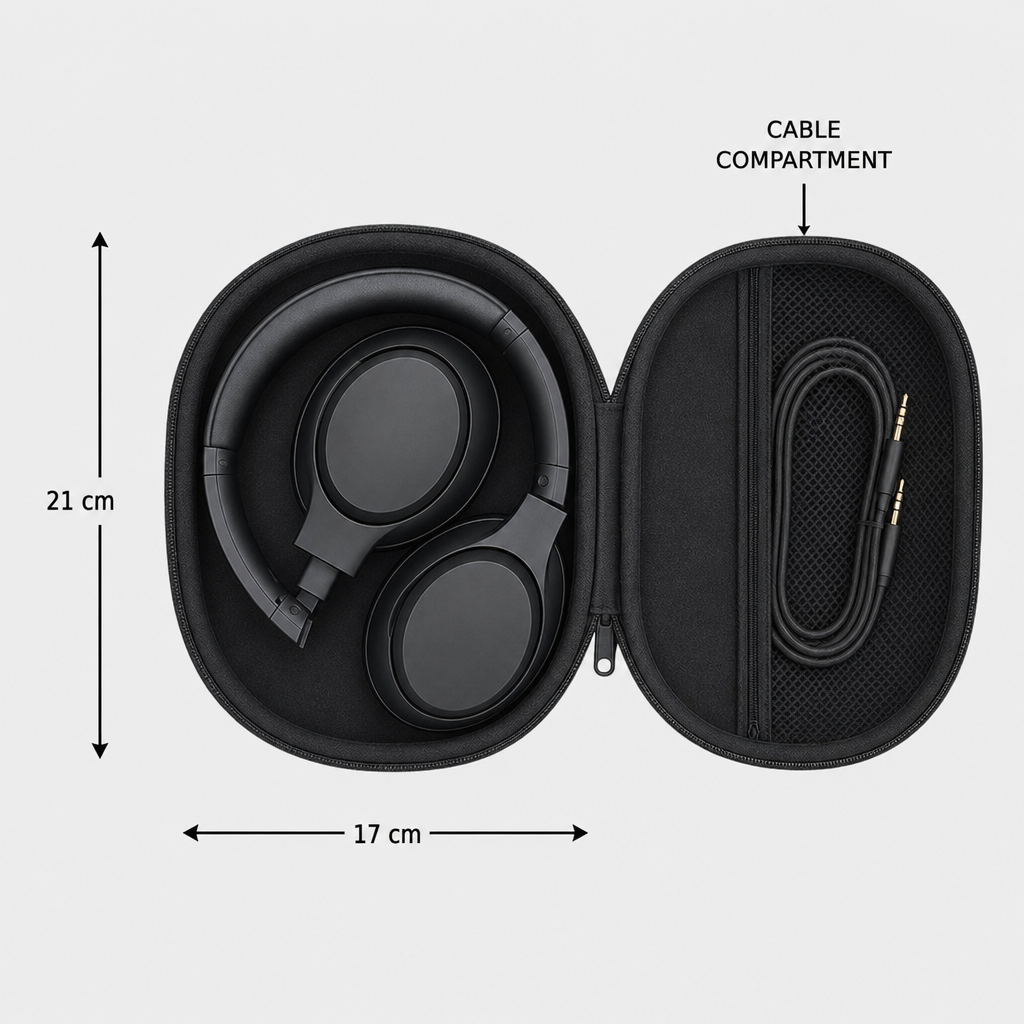
Record the maximum length, width, and height of the complete stored arrangement. Include protruding controls, hinges, cable sockets, and any attached components. State whether users must retract the headband or rotate the earcups before packing.
Avoid choosing internal dimensions by adding an arbitrary allowance to a product drawing. Instead, ask the supplier to propose clearance for the lining, cushioning, manufacturing variation, and easy removal. Review that proposal against actual headphones, preferably including representative production variation.
Mark areas that should not carry closing pressure. For example, ask the designer to investigate support around the headphone structure while keeping pressure away from cushions, controls, and folding joints. Confirm the result physically rather than assuming a snug-looking cavity is safe.
For a practical layout review, place the headphones and accessories on a full-size paper template. Try packing and unpacking them in the intended sequence. If the arrangement requires careful cable weaving every time, simplify it before developing tooling.
Which EVA materials and construction should you specify?
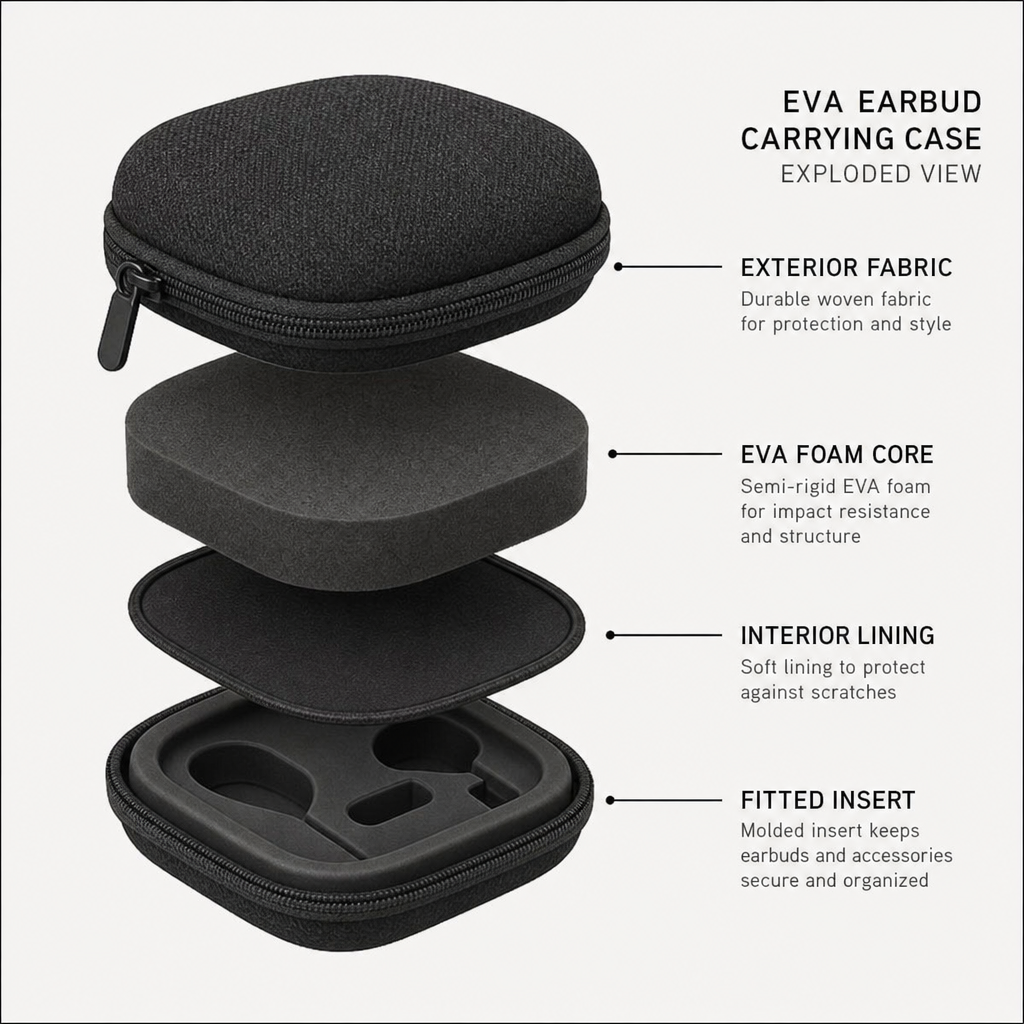
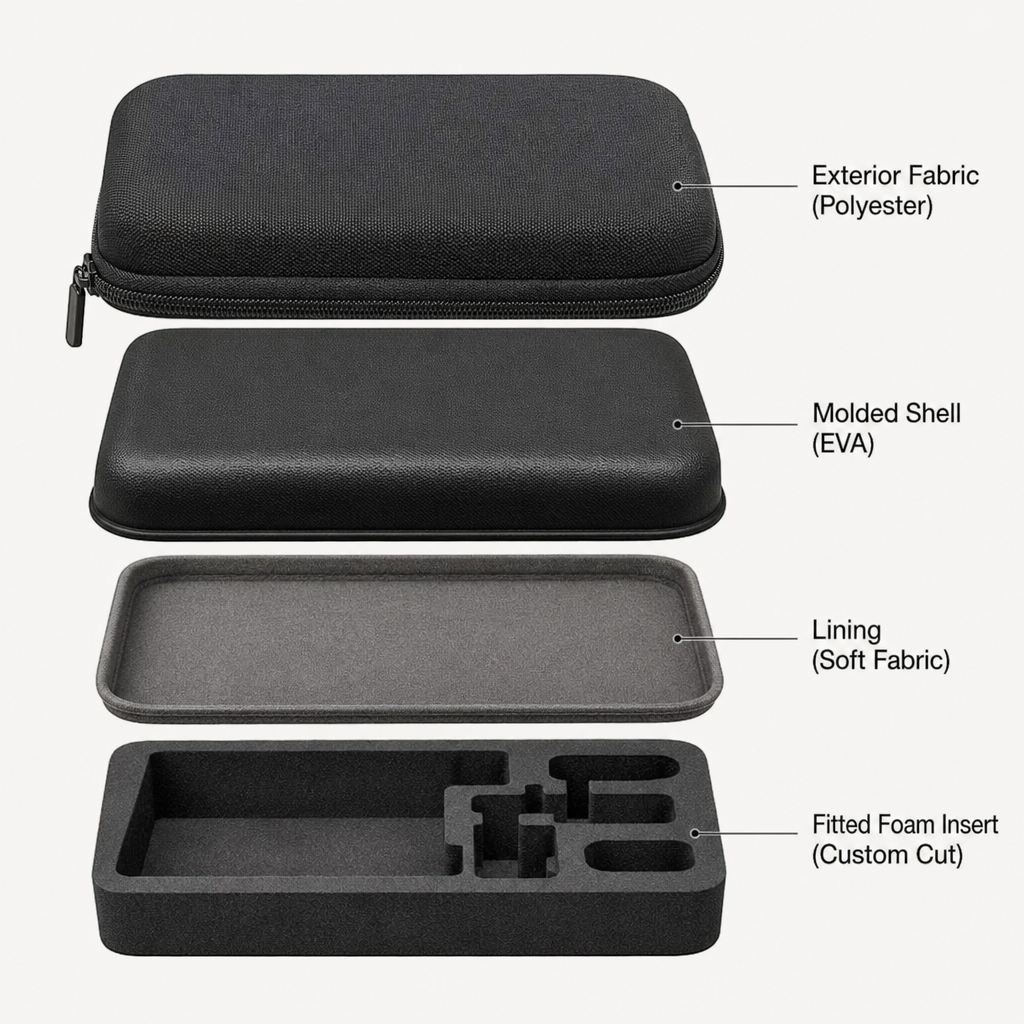
Specify the complete material assembly, not simply “EVA.” EVA means ethylene-vinyl acetate; protective foam grades can be closed-cell and cross-linked, with grade-specific mechanical properties. Zotefoams publishes separate density, compression, hardness, and recovery data for its EVA foam grades, illustrating why the material name alone is not a performance specification.
For a custom case, request identification of the structural foam, exterior covering, inner lining, insert, adhesives, and closure components. Beyond Case describes selecting EVA thickness and density, then laminating exterior fabrics before forming and assembly. Treat that as a manufacturing example, not a universal recipe.
Compare material samples against your priorities
Use the following table as a supplier discussion tool. These are evaluation recommendations, not claims that one material is always superior.
| Component | Options to discuss | What to check on samples |
| Structural shell | Proposed EVA grades and thicknesses | Shape retention, deflection, weight, and dimensional consistency |
| Exterior | Polyester, nylon, or coated coverings | Abrasion appearance, marking, cleaning, and logo finish |
| Interior lining | Supplier-proposed soft textiles | Surface feel, lint, color transfer, and seam placement |
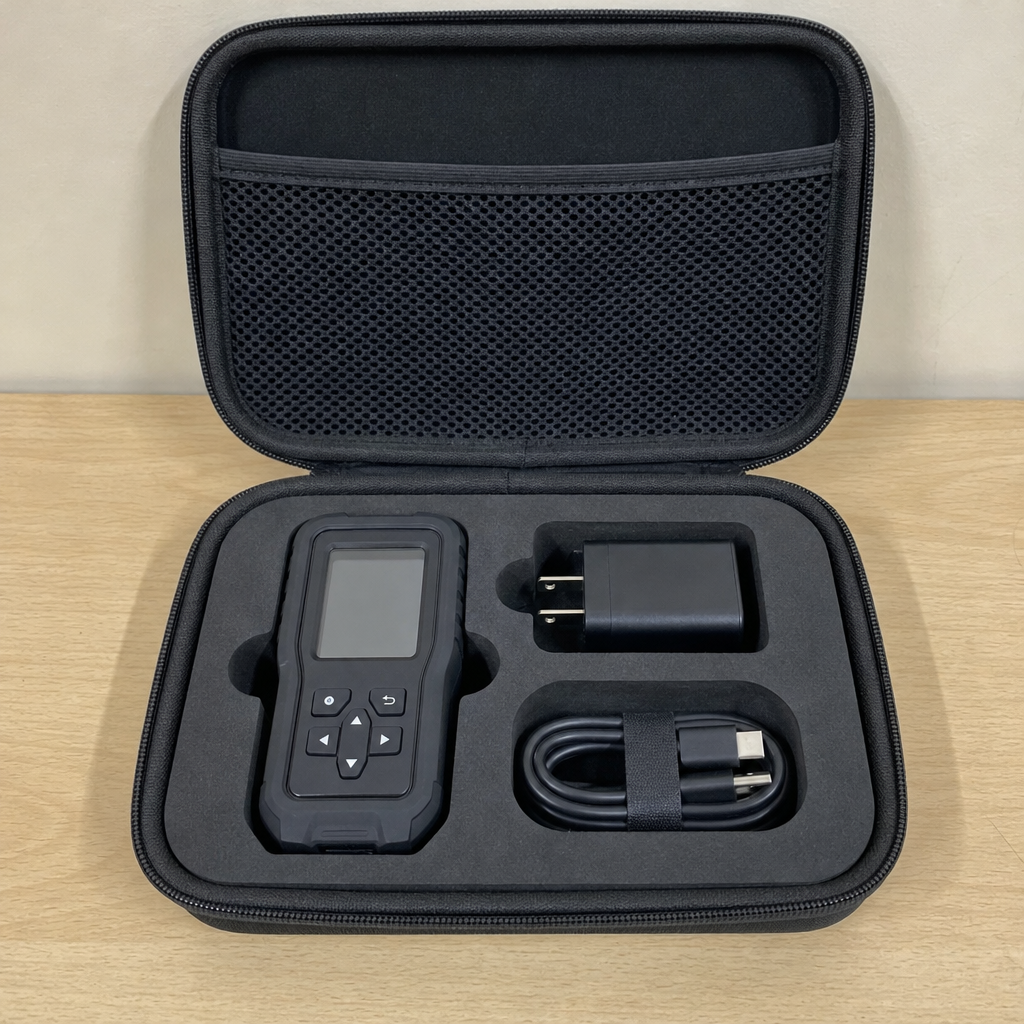
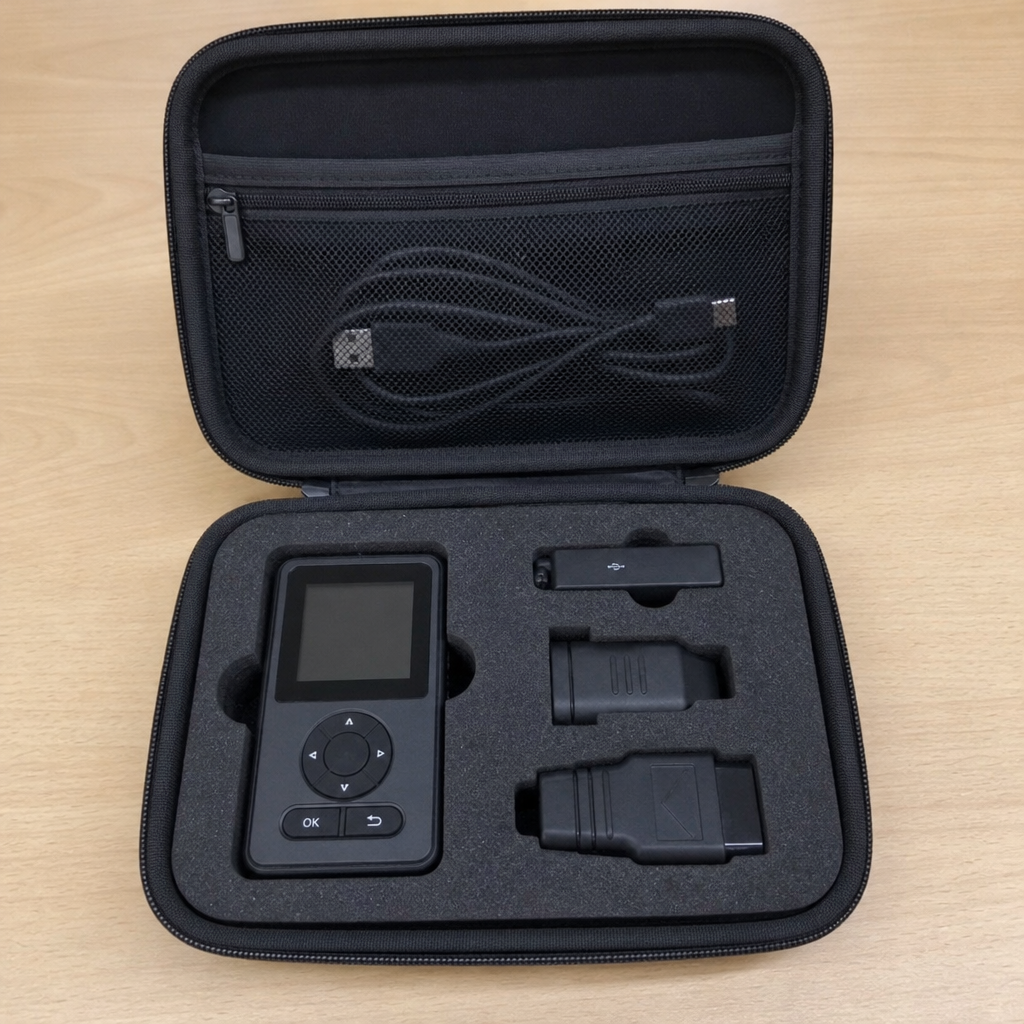
| Product support | Shaped insert, cut foam, or padded restraint | Retention, contact pressure, removal, and repeatability |
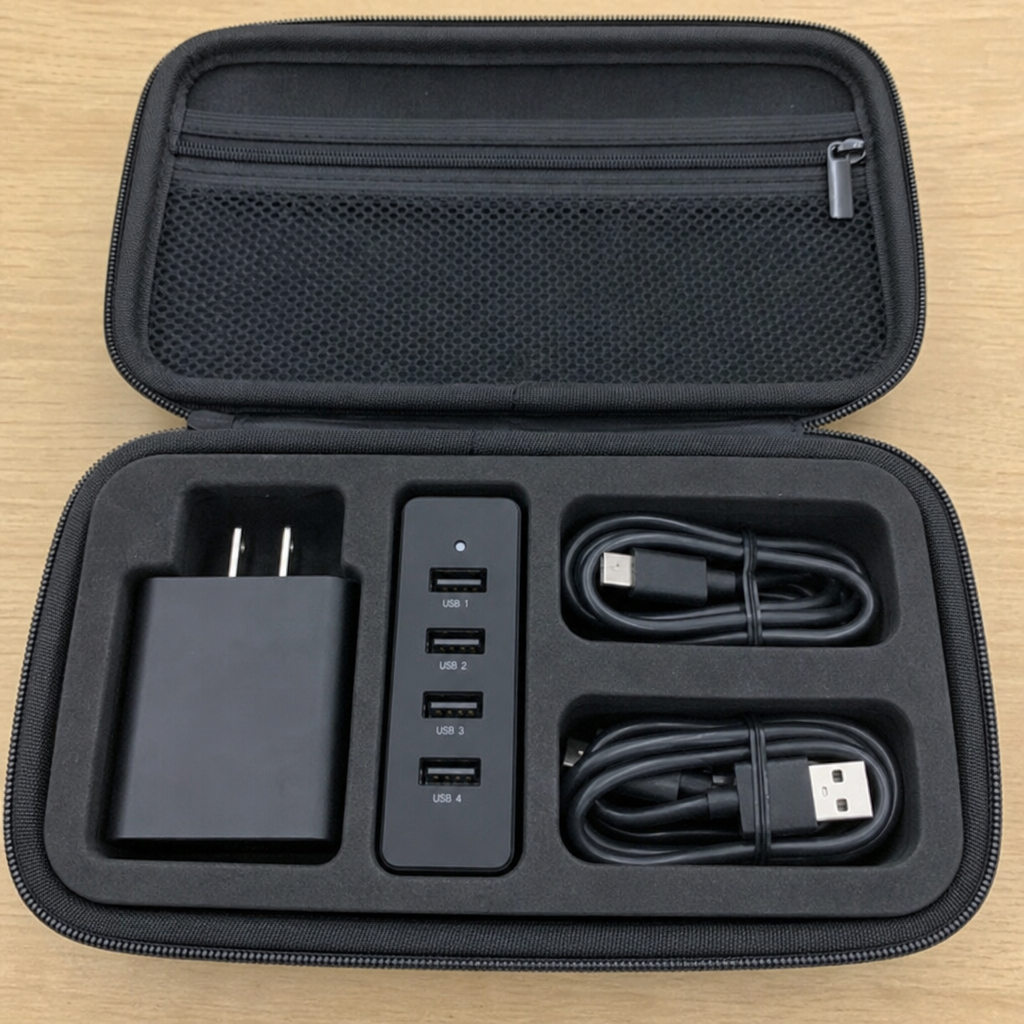
| Accessory storage | Mesh pocket, divider, elastic loop, or separate recess | Separation from headphones and clearance when closed |
Do not treat density and hardness as interchangeable specifications. Zotefoams lists them as separate properties with separate test methods; request both where relevant, along with the hardness scale and measurement conditions. Compare like-for-like data rather than isolated numbers from different suppliers.
Ask suppliers to distinguish material data from finished-case test results. A foam datasheet describes the tested material under stated conditions; Zotefoams explicitly presents typical values as selection guidance. Require separate evidence for any protection claim made about the assembled headphone case.
Build the interior around realistic packing behavior
Recommend a defined resting position for the headphones and make that position visually obvious. Use the sample review to check whether the user can recognize the correct orientation without instructions. Add a finger recess or lifting tab if removal otherwise requires pulling on an earcup or headband.
Separate accessories from sensitive surfaces
Give cables and adapters a designated locati0n. When evaluating a lid pocket, load it with the actual supplied accessories, close the case, and inspect the resulting contact points. Repeat the check with the cable loosely packed, not only arranged perfectly for photography.
For example, a travel bundle with a charging cable and adapter could use a separate accessory recess beside the folded headphones. A detachable boom microphone may justify its own retention feature. Choose the arrangement that passes fit and handling checks rather than the one that creates the most symmetrical presentation.
If one case must accommodate several headphone models, test every intended configuration. Document any model-specific insert or packing instruction. Do not approve a universal-fit claim using only the smallest model.
Make the closure and exterior work together
Specify the opening direction, zipper path, hinge area, handle position, and logo placement on the drawing. Ask the manufacturer to identify assembly restrictions before freezing the exterior shape. FFG’s EVA development guidance likewise calls for defining the contents, opening, edge finish, and connection points together.
During sampling, check that the zipper opens fully enough for easy loading and closes without pressing down on the lid. Evaluate pull-tab grip and listen for hardware striking the headphones during handling. If a carrying loop is included, agree how its attachment will be inspected and tested.
For branding, request artwork dimensions, placement references, color targets, and an approval sample. Inspect logos on a finished shell, not only a flat swatch. Keep decorative details away from areas where they interfere with opening, grip, or packing.
Turn EVA case design into a manufacturing specification
Ask the manufacturer to review the proposed geometry and explain the production route. Heat-and-tool forming is one documented approach for shaped EVA components, but suppliers may describe their processes differently. Confirm the actual method, material assembly, tooling requirements, and sample route instead of relying on terminology alone.
Issue a controlled specification containing:
- Drawings and revisions: Internal and external dimensions, reference points, and agreed tolerances.
- Material schedule: Approved grades, thicknesses, coverings, linings, and component references.
- Interior layout: Product orientation, support locations, accessory capacity, and removal features.
- Appearance requirements: Color references, artwork, stitching, trim, and acceptable cosmetic variation.
- Approval requirements: Sample stages, test procedures, packaging, and authorization to begin production.
Require written approval before substitutions. If the supplier proposes a different adhesive, lining, zipper, or foam, ask whether the change requires another fit or performance review. Keep the approved physical sample alongside the latest specification so purchasing and quality teams work from the same reference.
How should you test a headphone case prototype?
Test the prototype with the actual headphones and complete accessory set, using procedures agreed before approval. Define the handling conditions, sample quantity, inspection method, and pass/fail criteria for each test. Evaluate both the case and the headphones afterward rather than judging protection from the exterior appearance alone.
Use this checklist to build a project-specific validation plan:
- Fit and removal: Confirm loading, unloading, control clearance, and acceptable product movement.
- Closure operation: Check repeated opening and closing, zipper alignment, and snagging.
- Retention: Evaluate movement in agreed carrying orientations with all accessories loaded.
- Compression: Apply an agreed load and inspect shell deformation, product contact, and recovery.
- Drop handling: Agree heights, orientations, surfaces, and headphone functional checks.
- Surface compatibility: Inspect for scuffs, color transfer, residue, lint, and unwanted odor.
- Assembly durability: Review seams, handle attachments, lining adhesion, and edge finishing.
Set test severity around the intended use and risk assessment; there is no supplied basis for a universal drop height or cycle count. Where environmental exposure matters, agree conditioning before testing. Ask a qualified laboratory to help define procedures if internal testing cannot support the intended claim.
Retest affected features after design changes. Moving an accessory pocket, changing an insert, or revising a closure should trigger a documented review of which checks need repeating.
Compare custom EVA cases on an equivalent purchasing basis
Send the same specification and quotation template to every shortlisted supplier. Ask each to identify exclusions, assumptions, and proposed deviations. This helps purchasing managers compare actual offers rather than superficially similar photographs.
Request separate figures or clear inclusions for development, tooling, samples, unit production, decoration, packaging, inspection, and shipping. Ask about minimum order quantities by color and configuration, tooling ownership, storage, maintenance, and repeat-order arrangements. Confirm which sample approvals must occur before the production schedule starts.
For international buyers and importers, request packed unit dimensions, carton dimensions, carton quantities, and shipping weights. Confirm the quoted delivery basis and have your logistics provider review the shipment assumptions. Avoid comparing a factory collection price directly with an offer that includes delivery services.
Ask suppliers offering OEM/ODM manufacturing to define their scope. Establish who supplies the design, who controls revisions, who owns the tooling, and what technical records will be handed over. Do not assume those responsibilities from the service label alone.
Keep quality control tied to the approved design
Before bulk production, agree how the factory will verify incoming materials, work in progress, and finished goods. Identify the features most important to your project, such as internal clearance, closure alignment, insert placement, and logo position. Give inspectors drawings, photographs, and measurable acceptance criteria wherever possible.
Create a defect reference showing acceptable and unacceptable examples. Address cosmetic issues separately from functional failures so inspection decisions remain consistent. Agree the sampling approach, reporting format, corrective-action process, and shipment-release responsibility in advance.
For market-specific documentation, give the supplier a destination-market requirements list prepared with your compliance team. Request evidence applicable to the actual materials and components being supplied, and have qualified reviewers confirm its relevance. Avoid accepting broad assurances as a substitute for the documentation your business needs.
When researching suppliers, explore their EVA headphone case product pages, custom manufacturing pages, and related articles about foam inserts, case materials, and quality inspection. Use those resources to prepare questions, then confirm project-specific answers in writing.
Move from concept to an approved sample
A headphone case project is ready to advance when the packing layout, material assembly, production specification, and validation plan agree. Resolve fit and usability problems before spending effort on decorative refinements. Then preserve the approved design through revision control and clear inspection criteria.
If you are sourcing custom EVA cases, prepare a headphone sample or CAD file, accessory list, expected quantities, branding artwork, and destination-market requirements. Share that package with shortlisted OEM/ODM manufacturers and request a feasibility review, sample proposal, and itemized quotation. The next step is not simply a price—it is a sample you can evaluate against a clear brief.