Custom EVA Earbud Cases: Design, Fit, Protection
Discover how custom EVA cases for earbuds enhance design, fit, and protection. Learn to create specifications, choose materials, and ensure precise fit and durability.
Custom EVA Cases for Earbuds Design Fit and Protection
Custom EVA cases for earbuds are protective carrying cases designed around an earbud set, its charging case, and selected accessories. For buyers and product teams, the purchasing decision should connect three things: the material construction, the fit of the contents, and the protection demonstrated by the finished sample. This article explains how to turn those requirements into a practical design brief, compare manufacturing options, and evaluate suppliers before ordering.
What makes a custom EVA earbud case different?
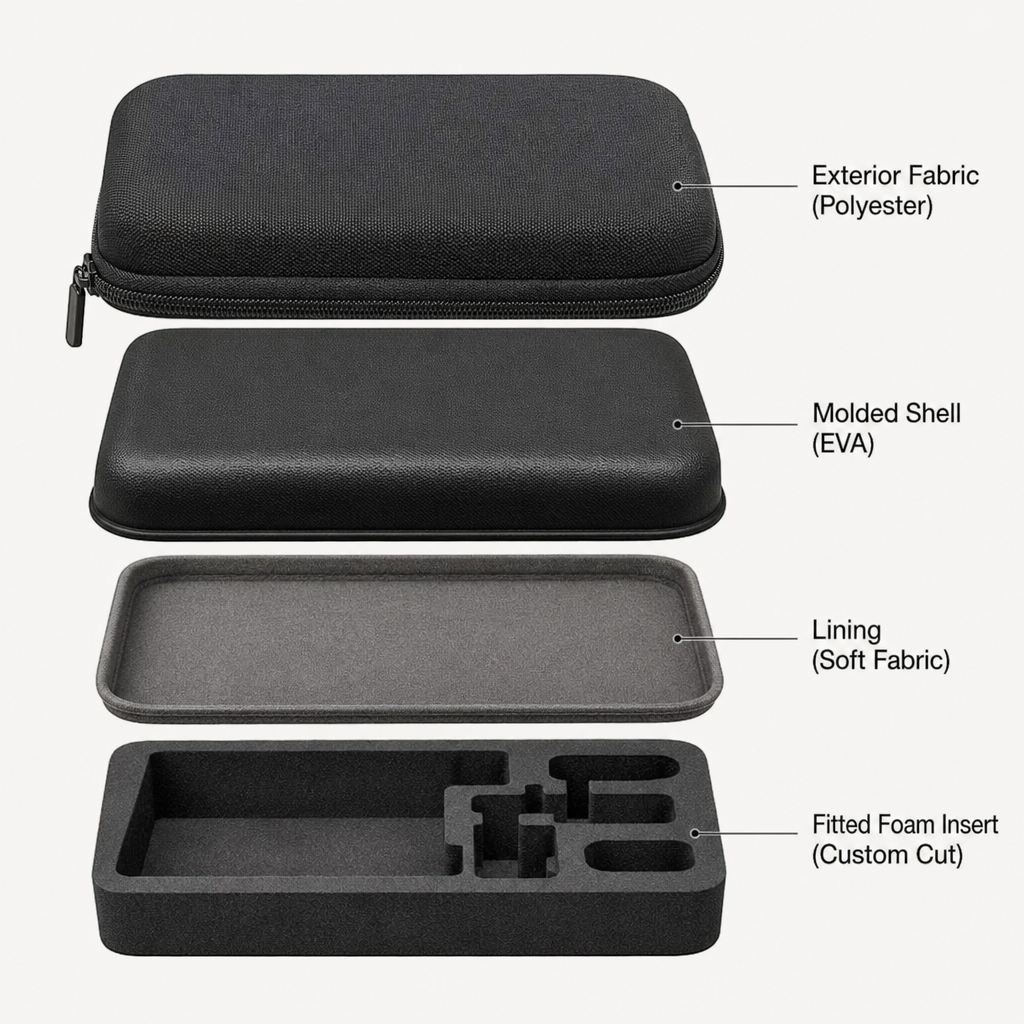
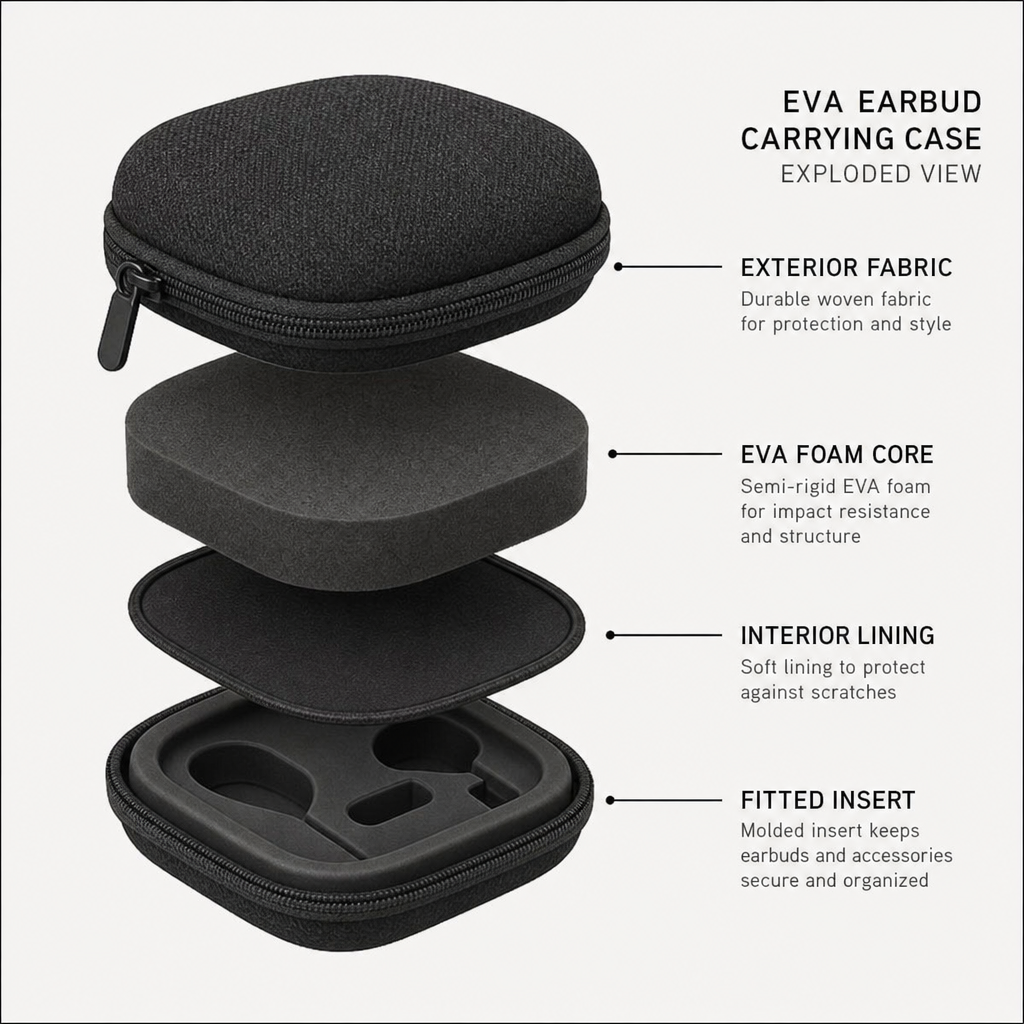
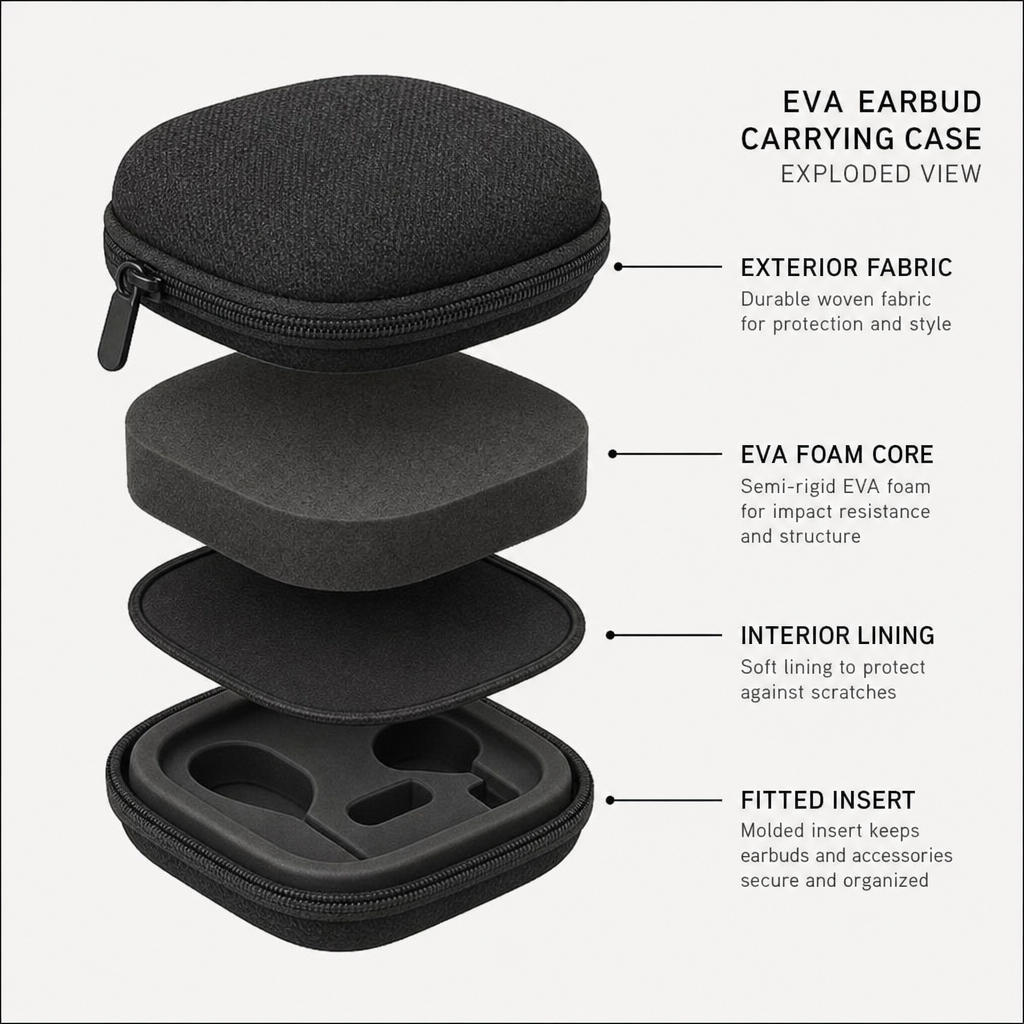
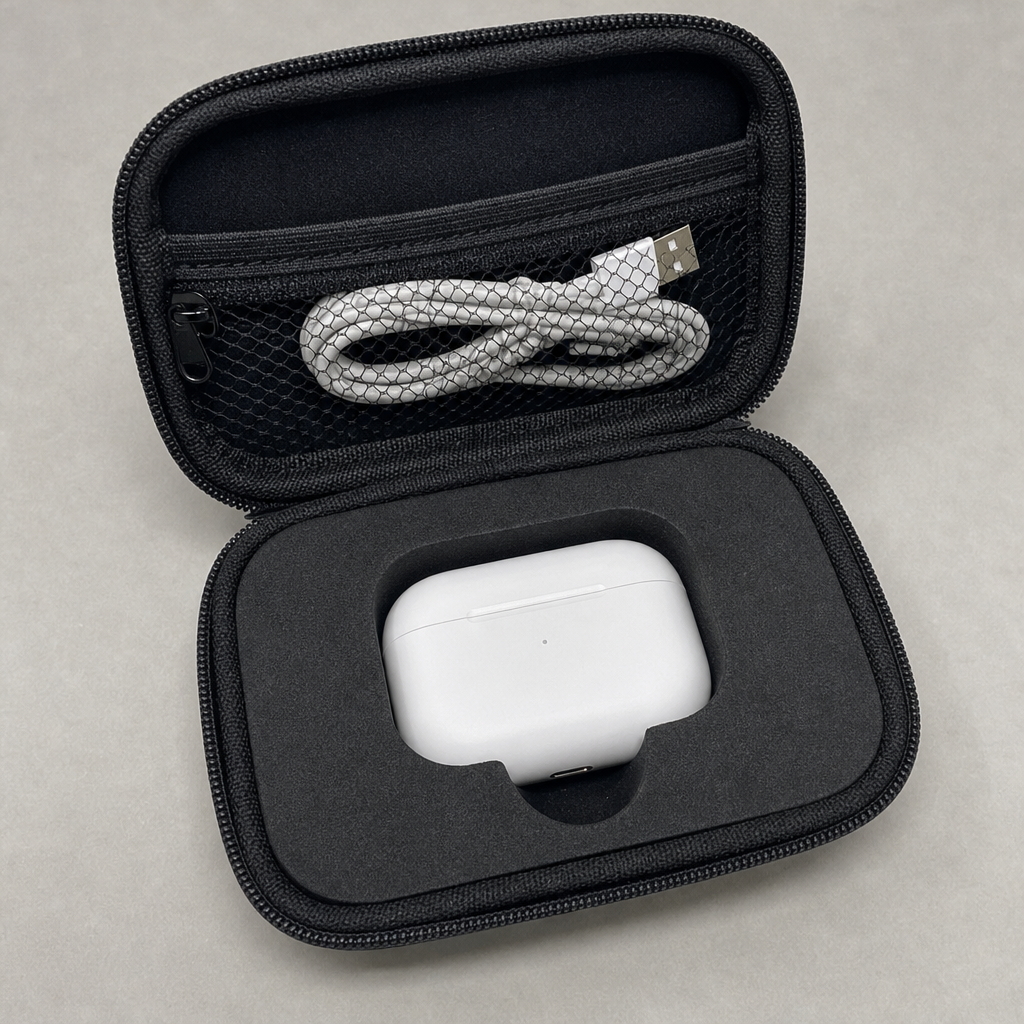
A custom EVA earbud case uses a shaped ethylene-vinyl acetate foam structure with dimensions, compartments, and finishes developed for a particular product or kit. Thermoformed EVA constructions can combine a semi-rigid foam core with textile surfaces and an internal lining. This makes the complete construction—not simply the word “EVA”—important when comparing proposals.
First, distinguish the protective carrying case from the electronic charging case. In this article, the EVA case is the outer organizer; it does not replace the charging function. For example, Apple specifies that its earbuds charge inside their compatible charging case.
For a sourcing brief, define the intended use before choosing a shape:
- Retail accessory: Prioritize convenient access, compact dimensions, and compatibility with the named earbud model.
- Branded product bundle: Plan space for the charging case, cable, replacement tips, and printed instructions.
- Demonstration kit: Specify separate positions for each item so staff can check the contents before travel.
- Multi-model accessory: Identify every supported device and require fit approval for each one.
“Universal” should be a tested compatibility list, not an assumption based on similar-looking products.
Specify the complete material construction
EVA identifies a material family, not a finished-case performance level. Zotefoams, for example, publishes separate properties for an EVA foam grade, including density, compression behavior, hardness, and water absorption, while describing those values as guidance for material selection. A supplier should therefore identify the proposed grade or specification rather than offer “high-quality EVA” as the entire explanation.
Request a layer-by-layer construction description covering the exterior, foam core, lining, insert, adhesive, and closure. Record any acceptable substitutions before approving production. Otherwise, two quotations may describe visually similar cases while leaving important construction differences unresolved.
Match material choices to the intended experience
Use the following comparison as a development checklist, not a substitute for sample testing. Ask suppliers to explain each proposed choice against the same requirements.
| Component | What to specify | What to check on the sample |
|---|---|---|
| Exterior covering | Material, texture, color reference, cleaning expectations | Appearance after rubbing, handling, and cleaning |
| EVA structure | Grade, thickness, hardness specification, formed geometry | Shape consistency and resistance to the agreed loading |
| Interior lining | Material, color, contact surfaces | Rough edges, loose fibers, color transfer, and abrasion |
| Insert or cradle | Material, cavity geometry, retention method | Movement, removal effort, and accessory separation |
| Zipper and puller | Size, opening direction, puller design | Smooth operation with the complete kit loaded |
Avoid selecting the firmest sample automatically. Instead, ask the supplier to explain how the proposed construction meets the loading, fit, and handling requirements, then validate those points together.
How should an EVA case fit earbuds and accessories?
An EVA carrying case should hold its intended contents securely without forcing the zipper closed, loading delicate features, or making removal awkward. Establish fit using production-representative devices, not only published external dimensions. Define the contents, their orientation, and the acceptable movement before approving the internal layout.
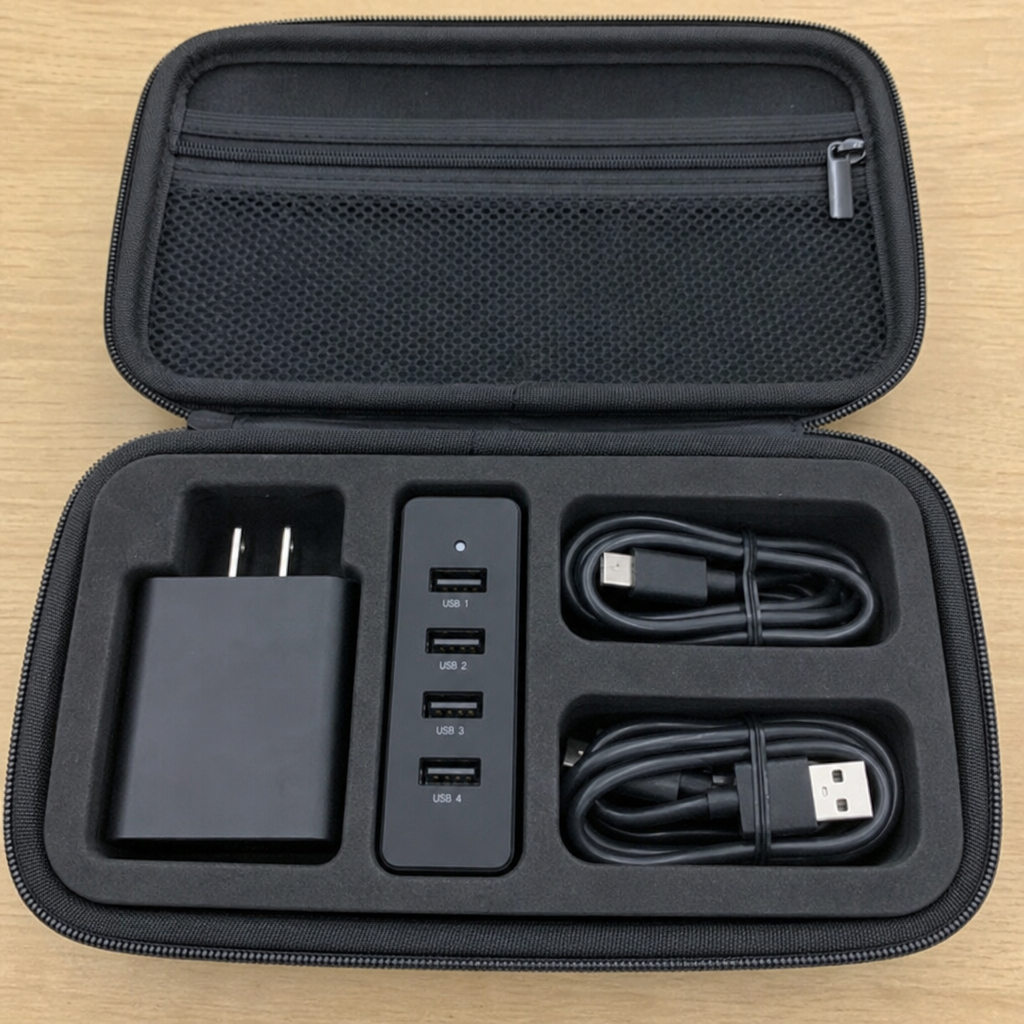
Start with a complete packing list. Include the charging case, the actual cable supplied with the kit, spare ear tips in their intended container, and any adapter. If users are expected to keep a silicone cover on the charging case, specify that configuration explicitly.
Build clearance into the finished assembly
Ask the designer to assess usable internal space after the lining, seams, insert, and closure are included. Put critical dimensions and agreed tolerances on the approved drawing. Do not apply one arbitrary clearance to every surface; identify where retention is needed and where access matters more.
A useful fit review follows this sequence:
- Load every item. Use the intended cable coil and accessory packaging, not simplified substitutes.
- Close the case normally. Reject a layout that requires squeezing the contents into position.
- Check contact points. Inspect the charging-case lid, hinge, buttons, ports, and exposed accessories.
- Assess retention. Move the closed sample through agreed handling motions, then inspect displacement.
- Repeat removal. Confirm that finger recesses or pull tabs work without pulling on cables or delicate features.
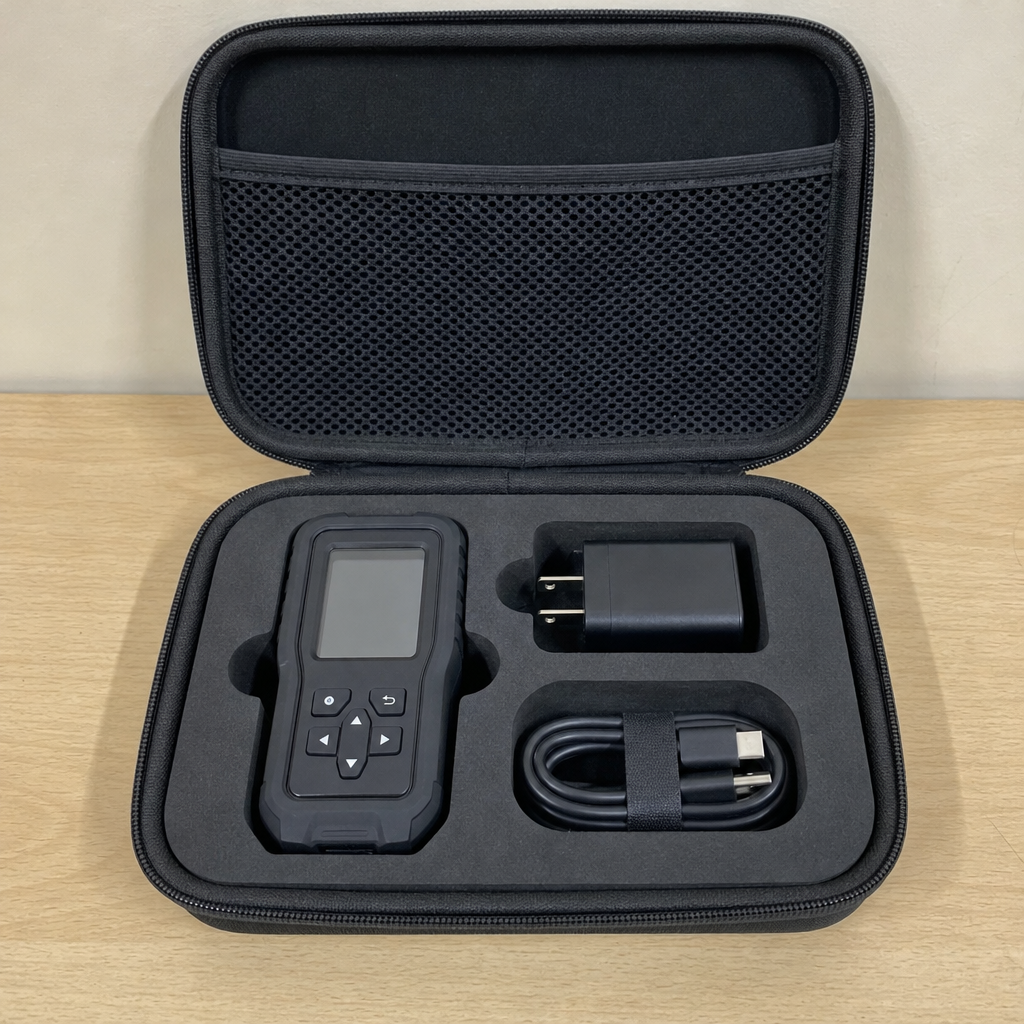
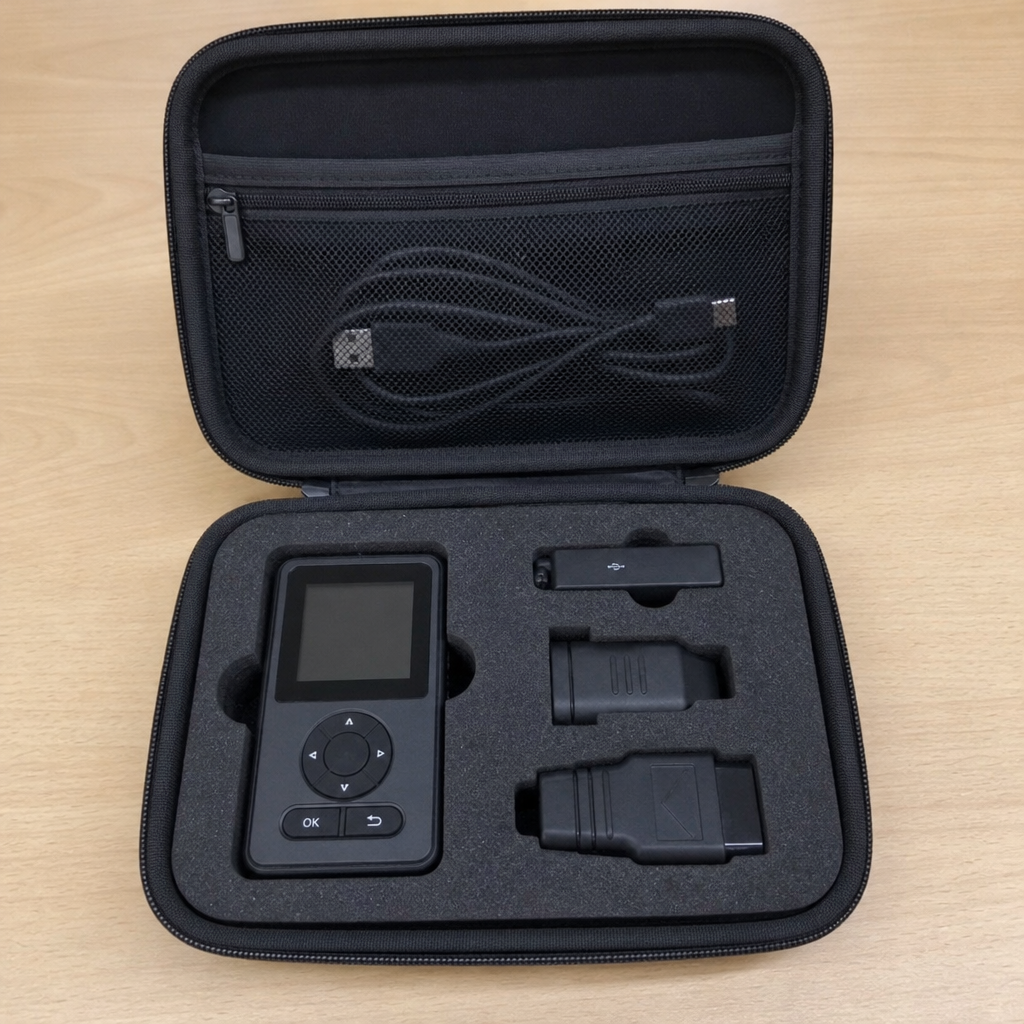
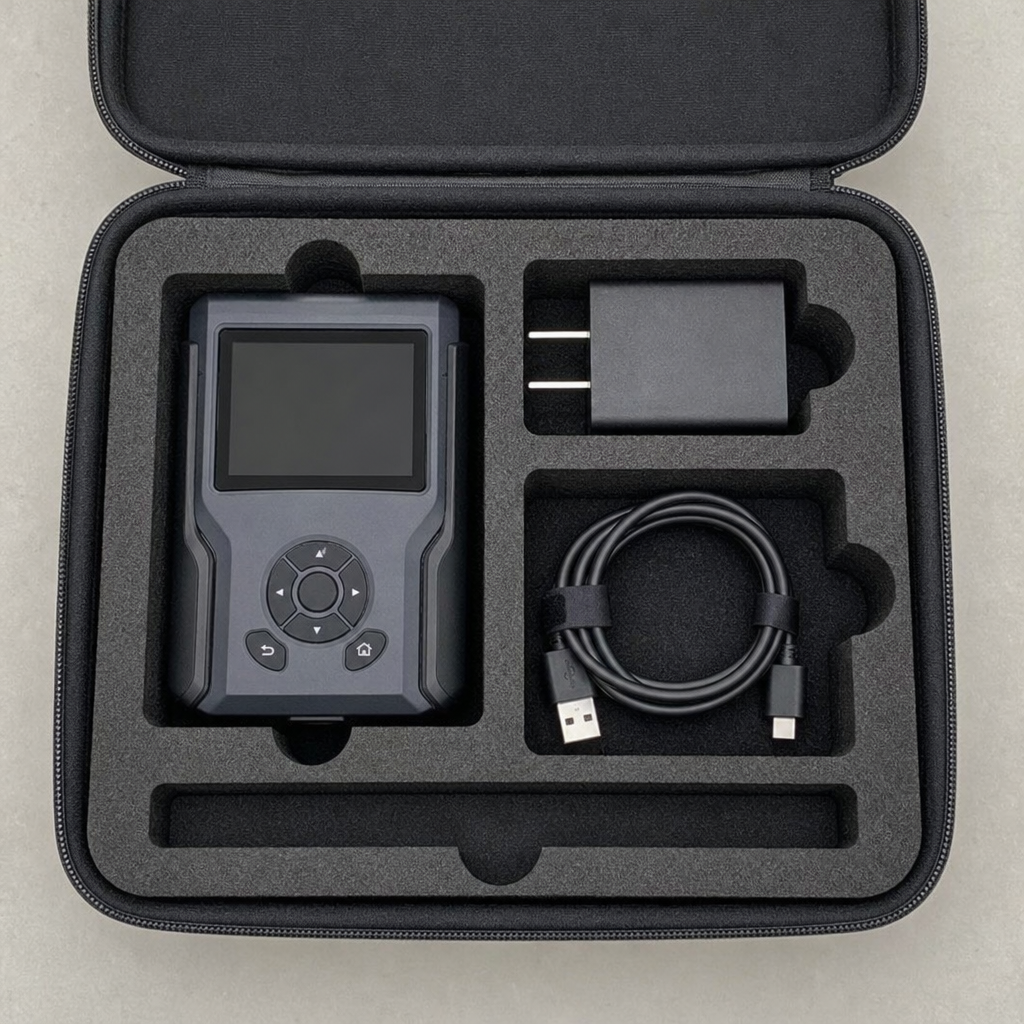
For example, a travel bundle might use a fitted lower cradle and a separate lid pocket. Approve that arrangement only after checking that the loaded pocket does not press against the charging case. A tidy open-case photograph is not enough to establish closed-case fit.
Design protection around realistic risks
Define what the product needs protection from: rubbing against accessories, movement during carrying, accidental drops, or pressure inside a bag. Turn each concern into a sample evaluation rather than relying on descriptions such as “shockproof.” Intertek’s luggage-testing services include physical assessments such as drop testing and fastening strength, illustrating why protection should be evaluated through specific tests.
Separate cosmetic acceptance from device functionality. After an agreed handling or drop evaluation, inspect the carrying case, charging-case finish, lid operation, accessory positions, and earbud operation. Record both the test conditions and the acceptance criteria so later production checks use the same reference.
Keep moisture claims precise
Low water absorption in a foam grade does not establish waterproof performance for an assembled carrying case. Zotefoams reports water absorption for a specific foam specimen, while dedicated watertight cases use closure and sealing arrangements such as those described by Pelican. Treat the complete assembly as the subject of any moisture-protection claim.
If splash protection matters, ask what finished-case test supports the proposed wording. Do not transfer an earbud device’s rating to its outer carrying case. For care instructions, follow the device manufacturer’s guidance; Apple, for example, tells users to wipe affected earbuds dry before returning them to their charging case after sweat or splashes.
Balance earbud case designs with everyday usability
Evaluate earbud case designs through ordinary tasks: opening the case, finding an accessory, removing the charging case, and packing everything away. Set those tasks alongside visual requirements in the design brief. This gives reviewers something more useful to discuss than whether a sample merely looks premium.
Consider these trade-offs during development:
- Compactness versus access: Compare the smallest layout with one that provides a clear finger recess. Ask users to remove and replace the device repeatedly.
- Storage versus lid clearance: Load pockets fully before approving their depth or position.
- Visibility versus appearance: Compare lining swatches with the actual ear tips and accessories placed against them.
- Carry attachment versus simplicity: Include a loop or clip only when the intended use justifies it, and specify an attachment-strength check.
Approve branding on the intended surface. Cases By Source describes options including printing, woven labels, and color-matched textiles; availability depends on the proposed construction and manufacturing process. Request a decorated sample rather than approving logo placement from artwork alone.
Move from concept to an approved production sample
Ask prospective manufacturers to explain their development sequence and approval gates. Cases By Source describes design-for-manufacturing review, first-article approval, and production activities such as cutting, molding, sewing, printing, and inspection. Use that as a reason to clarify the supplier’s actual workflow, not to assume every factory follows an identical process.
Separate layout approval from production approval. A rough prototype may help evaluate packing and access, but request a later sample using the intended materials, decoration, and assembly. Mark each approval with its purpose so an early concept cannot be mistaken for the final reference.
For projects described as OEM or ODM, spell out responsibilities rather than relying on the label. Confirm who supplies drawings, develops the structure, owns tooling, approves changes, and maintains revision records. If a stock shell is proposed, ask which features remain fixed and which can be customized.
Retain an approved reference sample and a matching specification. Require written approval before changing the material, lining, zipper, insert, or decoration method. This creates a clearer basis for resolving differences between the development sample and delivered goods.
What should buyers check before approving bulk production?
Buyers should approve bulk production only after reviewing fit, workmanship, functional performance, packaging, and the documentation required for the destination market. Make acceptance criteria measurable wherever practical, and identify which checks apply to every shipment. An attractive sample does not replace a written inspection plan.
For EVA foam cases, develop that plan around the complete product:
- Dimensions and compatibility: Check critical internal dimensions and load the specified earbud model and accessories.
- Workmanship: Inspect shell symmetry, edge binding, stitches, lining attachment, cleanliness, and visible adhesive.
- Closure and attachments: Set appropriate checks for zipper operation, seam strength, pullers, and carry loops.
- Surface durability: Agree on relevant abrasion, colorfastness, and decoration checks.
- Packed performance: Evaluate the finished kit and shipping packaging against the intended distribution conditions.
These categories align with established bag-testing services: Intertek lists abrasion resistance, seam strength, zipper strength, colorfastness, and print-adhesion testing among its capabilities. Select methods and acceptance limits appropriate to the product instead of copying unrelated luggage specifications.
For chemical testing, ask a qualified laboratory to identify requirements relevant to the materials, destination, and intended use. Intertek identifies restricted-substance testing as part of its luggage and bag services. Request reports that clearly identify the tested materials or samples; do not treat an unexplained “compliant” statement as sufficient purchasing evidence.
Request quotations that support a fair comparison
Send the same brief to every shortlisted supplier. Include the product configuration, drawings or physical samples, intended order quantities, material expectations, branding artwork, test requirements, packaging, and delivery destination. Ask suppliers to list assumptions and exclusions alongside their prices.
Request separate quotation lines for development, tooling, samples, unit production, testing, packaging, and freight where applicable. Confirm minimum order quantities by design and color, not just for the total project. Ask when the quoted lead time begins and which approvals or material decisions must happen first.
For international orders, specify the currency, named delivery term and place, payment milestones, carton information, and responsibility for shipment documents. Have your logistics partner review the quotation before comparing delivered costs. Keep commercial assumptions visible rather than accepting a low headline price with unresolved details.
Use relevant EVA case product pages, custom manufacturing information, and related articles on foam inserts or protective-case testing as supporting references in your inquiry. Ask the supplier to confirm which published options apply to your project.
Bring design, fit, and protection into one brief
A useful specification for custom EVA cases for earbuds connects the contents, construction, user experience, and acceptance tests. Start with the complete kit, approve fit on representative devices, and support protection claims with finished-case evidence. Keep the approved sample and written specification aligned throughout production.
Ready to discuss a custom case or OEM/ODM project? Share your earbud model, accessory list, estimated quantities, branding requirements, and target market with a prospective manufacturer. Request a construction proposal, sample plan, and itemized quotation before committing to production.